publications
2026
-
 André Freitas , Xander M. Wit , Ziqi Wang , and 2 more authors2026
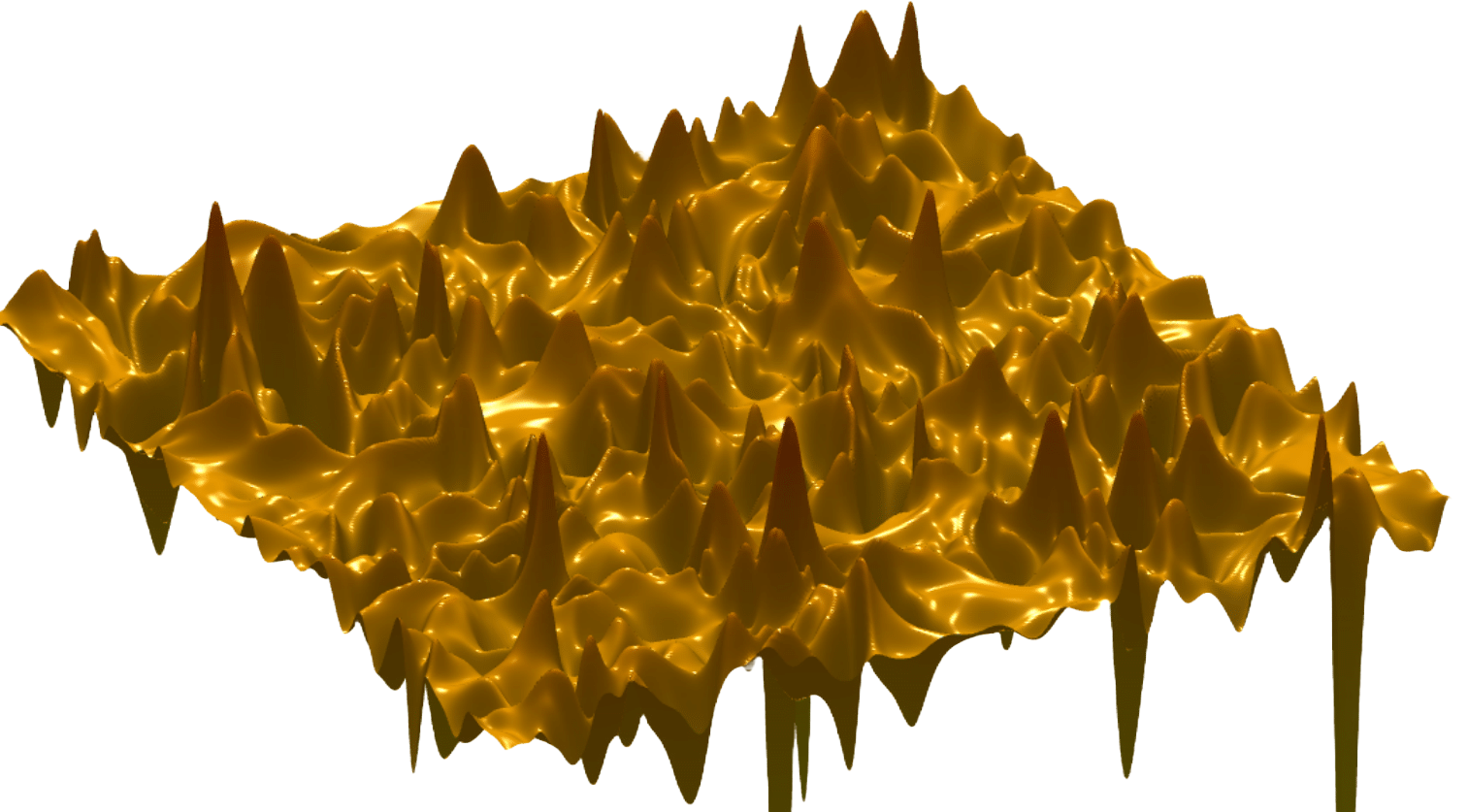
We investigate how turbulence can be reshaped by acting directly on vortex filaments through externally actuated light particles, using high-resolution direct numerical simulations with four-way coupling. Preferential concentration localises the particles within these coherent vortical structures, making it possible to inject a controlled, small-scale perturbation precisely where intermittency is most pronounced. We show that this combination of localisation and momentum feedback can effectively reduce intermittency, establishing a proof-of-concept mechanism to steer small-scale turbulence statistics, and shedding new light on the intricate relationship between vortex filaments and turbulence intermittency. While light particles provide a natural realisation of this idea, the underlying concept is more general and could be implemented with other Lagrangian agents that localise in targeted coherent structures.
-
 André Freitas , Kiwon Um , Mathieu Desbrun , and 2 more authorsEuropean Journal of Mechanics - B/Fluids, 2026
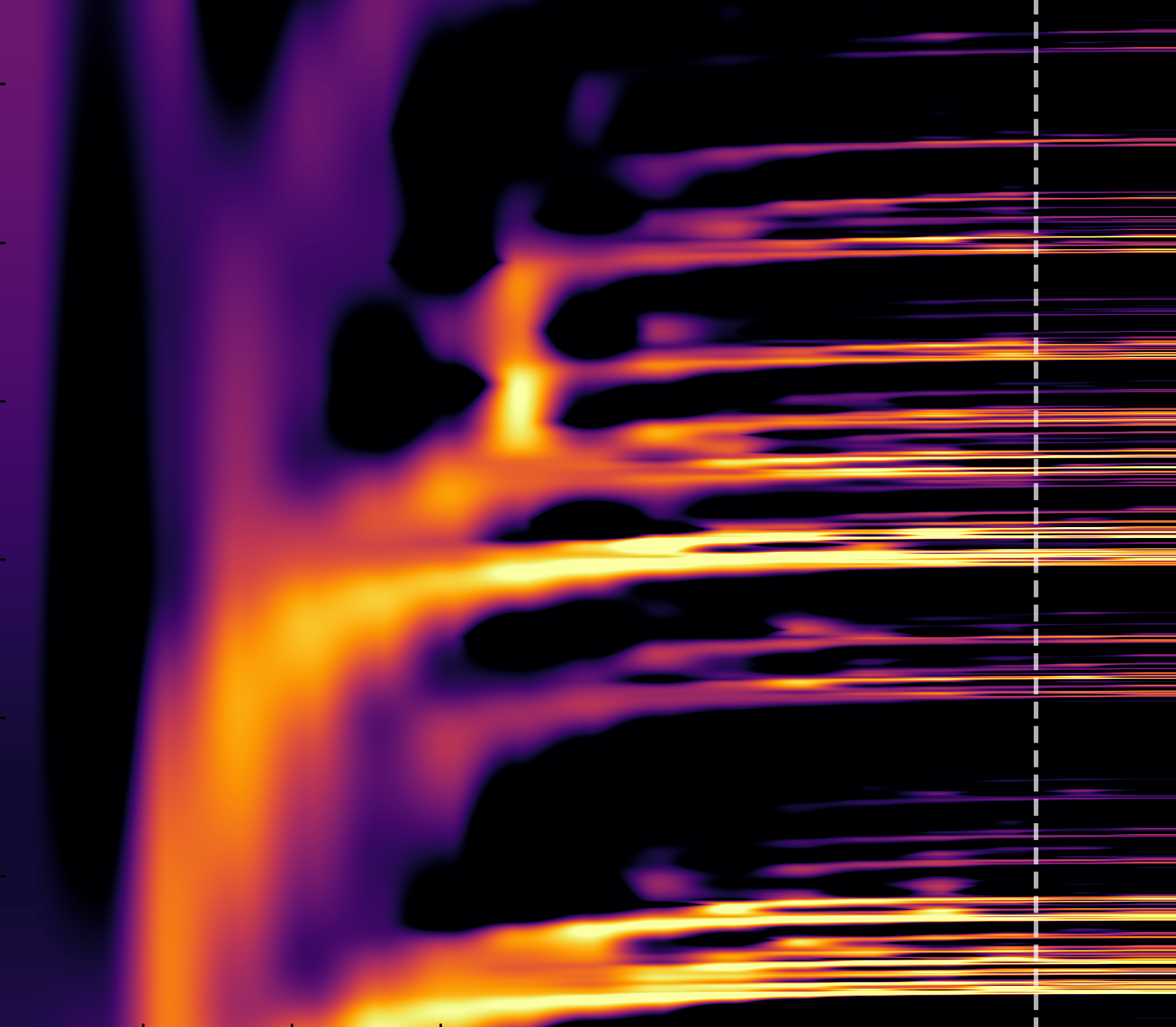
Turbulence modeling remains a longstanding challenge in fluid dynamics. Recent advances in data-driven methods have led to a surge of novel approaches aimed at addressing this problem. This work builds upon our recent work [Phys. Rev. Fluids 10, 044602 (2025)], where we introduced a new closure for a shell model of turbulence using an a posteriori (or solver-in-the-loop) approach. Unlike most deep learning-based models, our method explicitly incorporates physical equations into the neural network framework, ensuring that the closure remains constrained by the underlying physics benefiting from enhanced stability and generalizability. In this paper, we further analyze the learned closure, probing its capabilities and limitations. In particular, we look at joint probability density functions between resolved and unresolved variables, as well as the scale invariance of multipliers (ratios between adjacent shells) within the inertial range. Although our model excels in reproducing high-order statistical moments, it breaks this known symmetry near the cutoff, indicating a fundamental limitation. We discuss the implications of these findings for subgrid-scale modeling in 3D turbulence and outline directions for future research.
-
 A. Freitas , L. Biferale , M. Desbrun , and 3 more authorsEurophysics Letters, Apr 2026
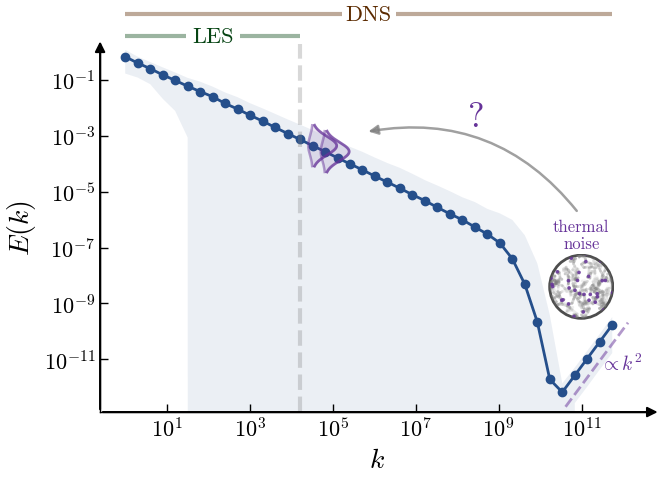
Deterministic closures for coarse-grained turbulence models help reproduce mean statistics, but often fail to capture the finite-time growth of uncertainty. Using the framework of shell models as a quantitative multi-scale testbed, we compare fully resolved simulations with large-eddy simulations using either stochastic or deterministic subgrid closures. While in the fully resolved system a single microscopic perturbation is rapidly amplified by strongly chaotic dynamics, truncation produces a strong delay and suppression of variance growth when uncertainty is introduced through initial condition perturbations only. We show that a data-driven Langevin-type stochastic closure restores the correct timing and magnitude of variance growth across scales, demonstrating that sustained stochasticity is essential for predictability in reduced turbulent dynamics.
-
 Xander M. Wit , Hessel J. Adelerhof , André Freitas , and 3 more authorsPhys. Rev. Fluids, Feb 2026
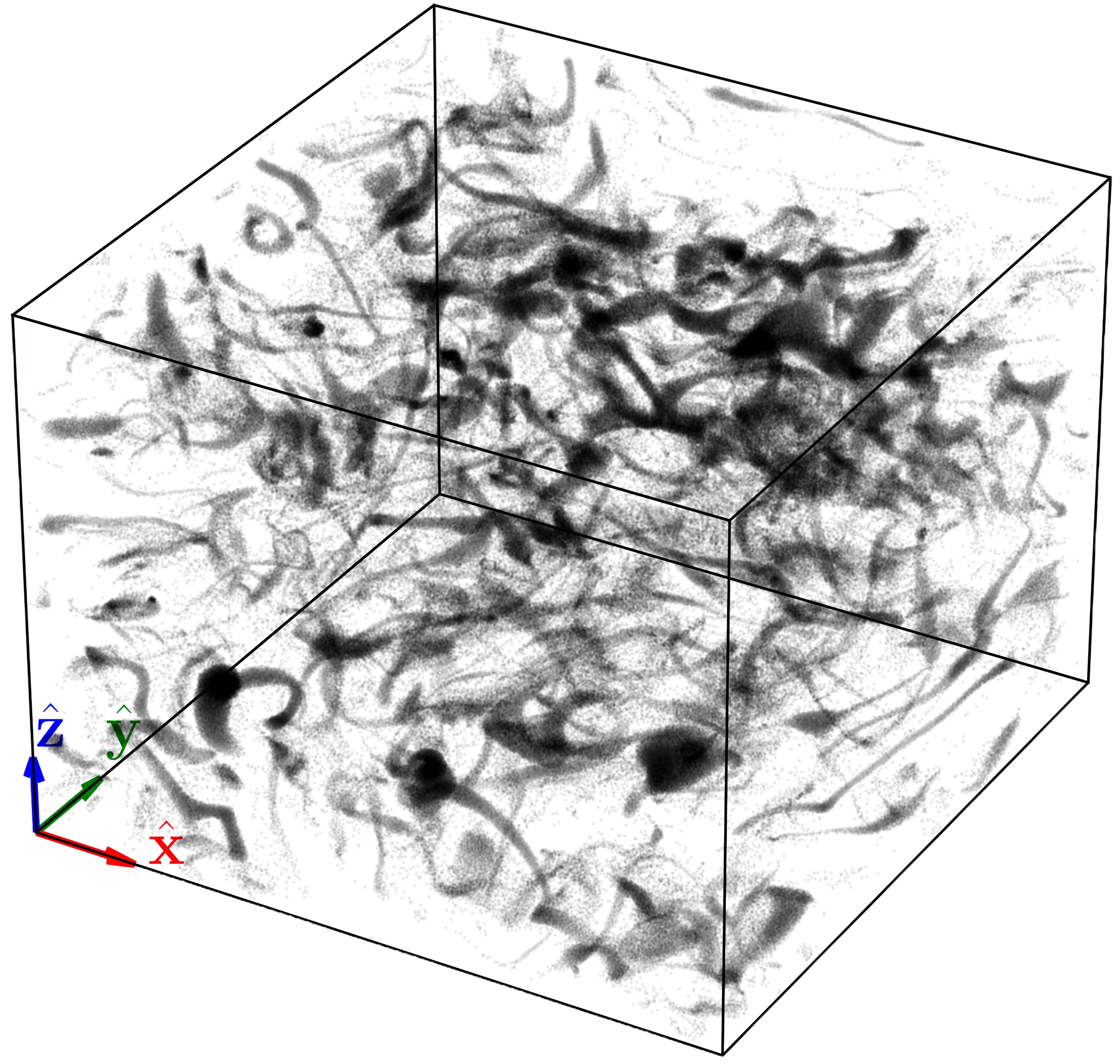
Turbulent flows laden with small bubbles are ubiquitous in many natural and industrial environments. From the point of view of numerical modeling, to be able to handle a very large number of small bubbles in direct numerical simulations, one traditionally relies on the one-way coupling paradigm. There, bubbles are passively advected and are non-interacting, implicitly assuming dilute conditions. Here, we study bubbles that are four-way coupled, where both the feedback on the fluid and excluded-volume interactions between bubbles are taken into account. We find that, while the back-reaction from the bubble phase onto the fluid phase remains energetically small under most circumstances, the excluded-volume interactions between bubbles can have a significant influence on the Lagrangian statistics of the bubble dynamics. We show that as the volume fraction of bubbles increases, the preferential concentration of bubbles in filamentary high-vorticity regions decreases as these strong vortical structures get filled up; this happens at a volume fraction of around one percent for \textrmRe_λ=\mathcalO(10^2). We furthermore study the influence on the Lagrangian velocity structure function as well as pair dispersion, and find that, while the mean dispersive behavior remains close to that obtained from one-way coupling simulations, some evident signatures of bubble collisions can be retrieved from the structure functions and the distribution of the dispersion, even at very small volume fractions. This work not only teaches us about the circumstances under which four-way coupling becomes important, but also opens up new directions towards probing and ultimately manipulating coherent vortical structures in small-scale turbulence using bubbles.


2025
-
 André Freitas , Kiwon Um , Mathieu Desbrun , and 2 more authorsPhys. Rev. Fluids, Apr 2025
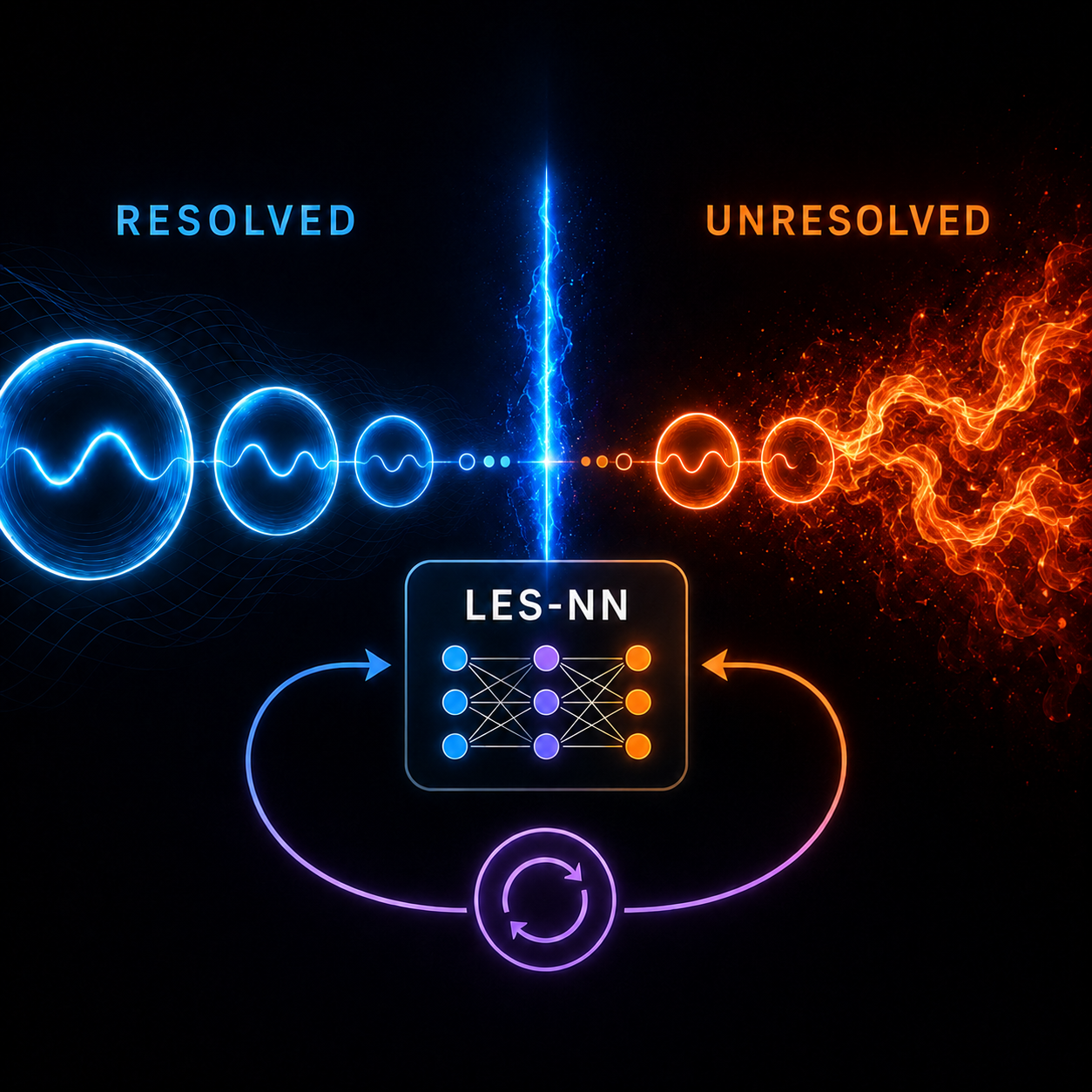
This work studies an a posteriori data-driven approach (known as solver-in-the-loop) for sub-grid modeling of a shell model for turbulence. This approach takes advantage of the differentiable physics paradigm of deep learning, allowing a neural network model to interact with the differential equation solver over time during the training process. The closure model is, then, naturally exposed to equations-informed input distributions by accounting for prior corrections over the temporal evolution in training. Such a characteristic makes this approach depart from the conventional a priori instantaneous training paradigm and often leads to a more accurate and stable closure model. Our study demonstrates that the closure learned via this a posteriori approach is able to reproduce high-order statistical moments of interest also in closures of high Reynolds number turbulence. Moreover, we investigate the performance of the learned model by experimenting with the effect of unrolling in time, which has remained for the most part unexplored in the literature. Finally, we discuss potential extensions of this approach to Navier-Stokes equations.

2024
-
 K. Zwijsen , A. Freitas , S. Tajfirooz , and 2 more authorsPhysics of Fluids, Dec 2024
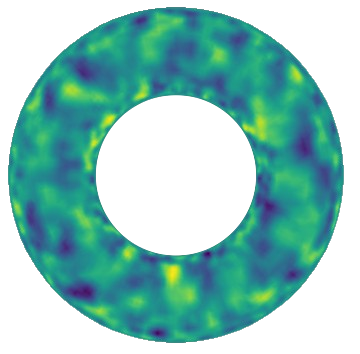
A significant aspect of the economic performance and safety of a nuclear reactor involves maintaining the integrity of the fuel rods, which are susceptible to Turbulence-Induced Vibrations (TIV) resulting from the axial flow of the coolant. TIV can instigate severe repercussions, including structural damage such as fatigue and wear. TIV can be studied numerically, using Fluid–Structure Interaction( FSI) simulations. However, high-resolution approaches are computationally too expensive to use for complex FSI simulations, while Unsteady Reynolds-Averaged Navier-Stokes (URANS) simulations severely underpredict the displacement amplitudes of the vibrations as they only resolve the mean flow. Evolving from this shortfall, this paper focuses on a recently developed Anisotropic Pressure Fluctuation Model (AniPFM). This model generates a synthetic velocity fluctuations field, which is used to solve for the pressure fluctuations. Using this model, together with URANS, is a possible way to simulate the excitation mechanisms of TIV of fuel rods in a computationally cheaper way. While previous research has highlighted the potential of this model, there are parameters, definitions, and constants whose impacts on the model are not yet fully understood. Therefore, a comprehensive effort is undertaken to fine-tune the model, optimize its performance, improve understanding of it and further validate it. This is done by applying AniPFM to both pure flow and FSI cases, using high-resolution numerical and experimental data as reference and for comparison. With the optimized model, a substantial decrease in average difference from the experimental data is found for the FSI case under consideration, when compared with the unoptimized version of AniPFM.
